Skip to content
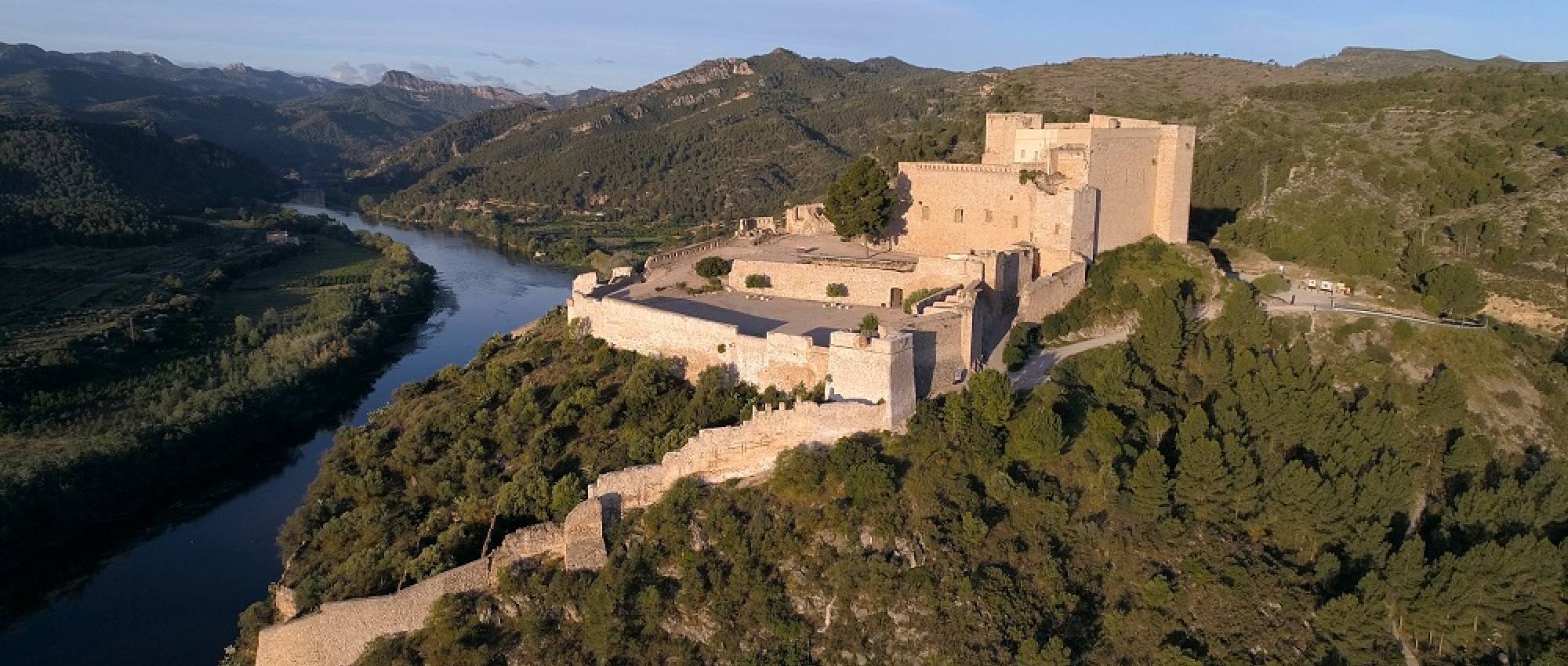
Aerial view of Miravet Castle, with small hills behind and the River Ebro on the left.
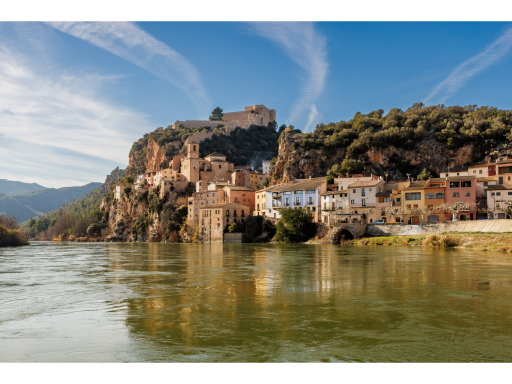
General view of the castle of Miravet.

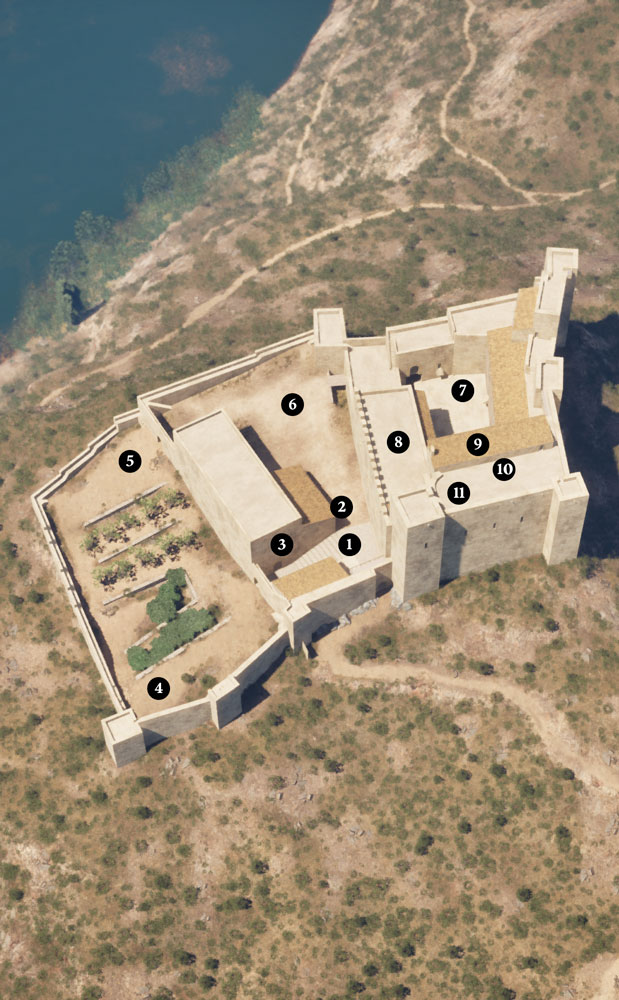
Map of the guide

  1. Top of the Stairs Leading to the Stables
  2. The Fountain
  3. The Stables
  4. Lower Outer Enclosure
  5. South Terrace
  6. Access area to the Upper Ward
  7. The Courtyard
  8. Refectory
  9. The Gallery
  10. The Church
  11. Virtual Reality Space

Introduction to the Multimedia Guide
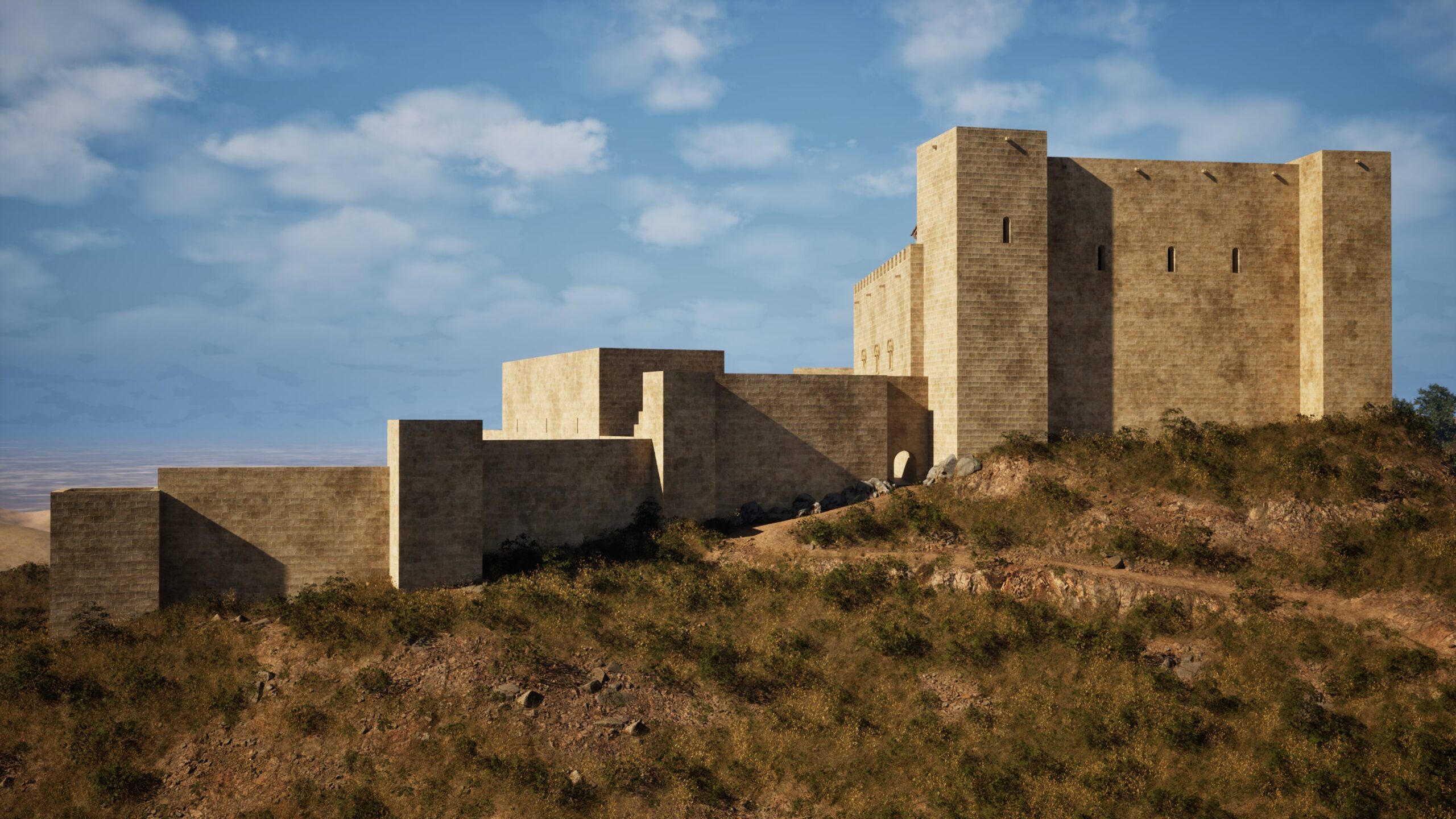
A hypothetical reconstruction of the north façade of the castle, with the hill on which it stands shown at the bottom of the image, between the 12th and 14th centuries.
A hypothetical reconstruction of the north façade of the castle (12th–14th centuries).

Introduction to the Multimedia Guide

Listen

1 Top of the Stairs Leading to the Stables
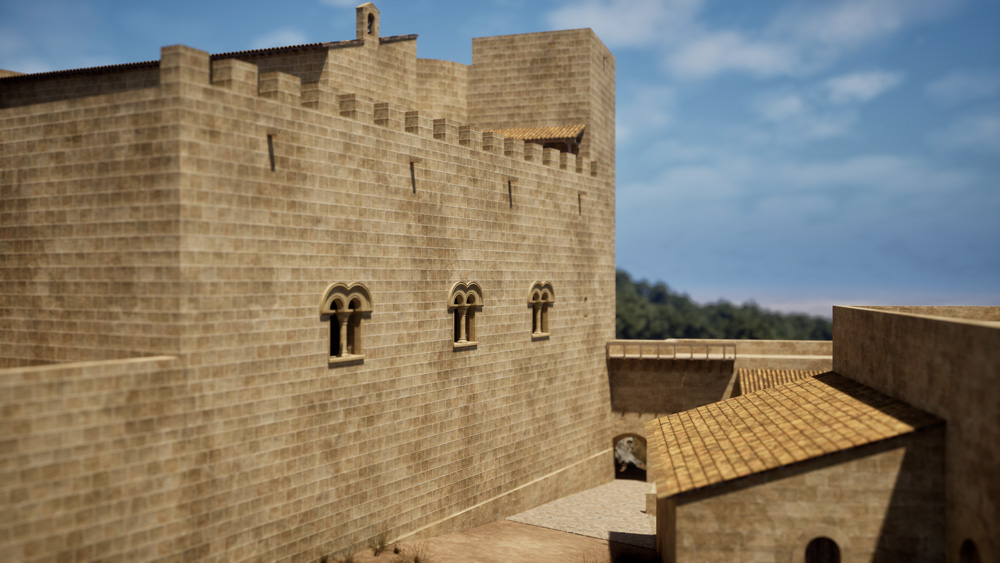
A hypothetical reconstruction of the exterior view of the castle’s refectory wall, with three pairs of windows, between the 12th and 14th centuries.
A hypothetical reconstruction of the outer refectory wall (12th–14th centuries).

1a A Templar Castle

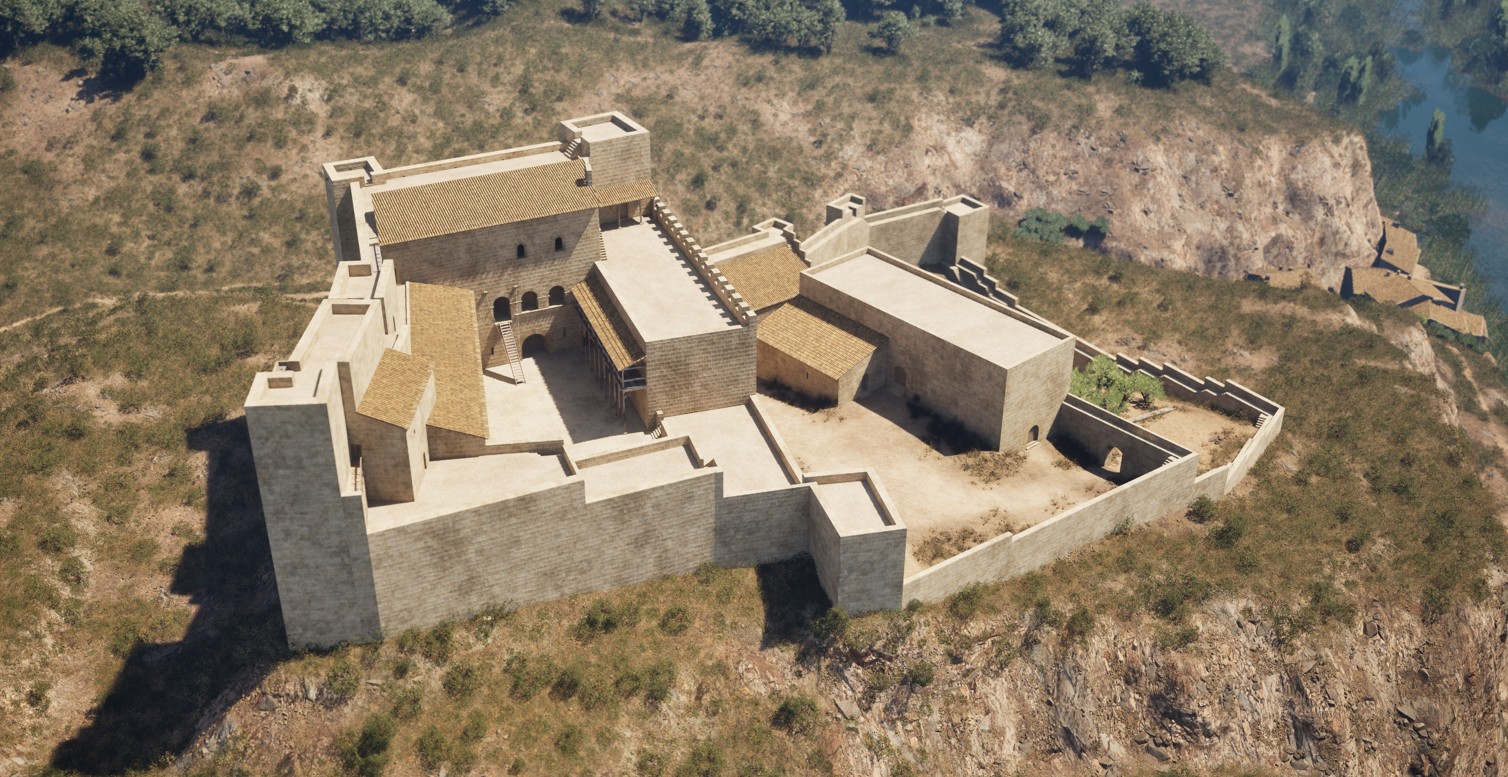
A hypothetical reconstruction of an aerial view of the castle, situated on a hill, with the River Ebro visible on the right, between the 12th and 14th centuries.
A hypothetical reconstruction of a general view of the castle (12th–14th centuries).

Listen

1b A Strategic Site Inhabited Since Prehistoric Times
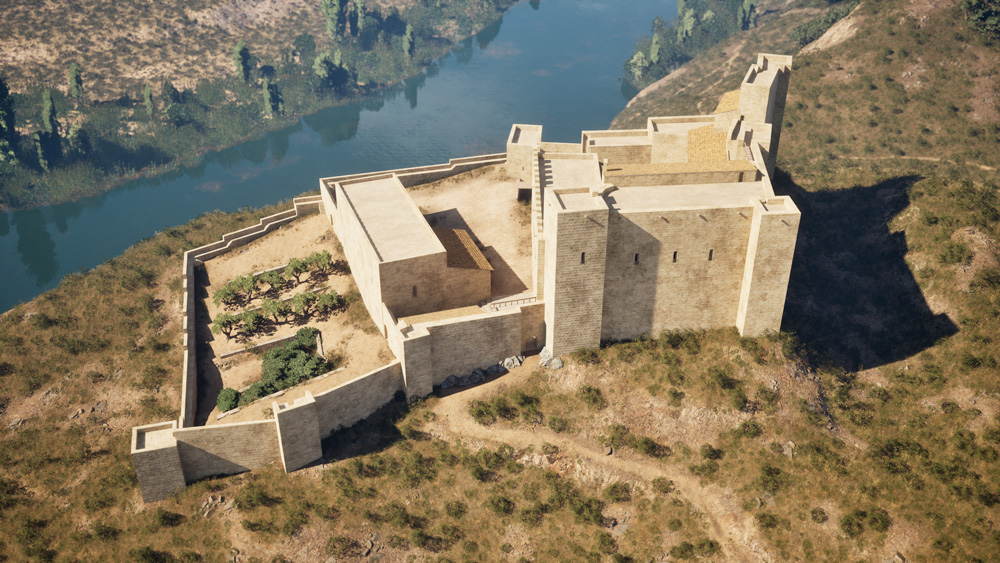
A hypothetical reconstruction of an aerial view of the castle, situated on a hill, with the River Ebro visible in the background, between the 12th and 14th centuries.
A hypothetical reconstruction of a general view of the castle (12th–14th centuries).

Listen

2 The Fountain

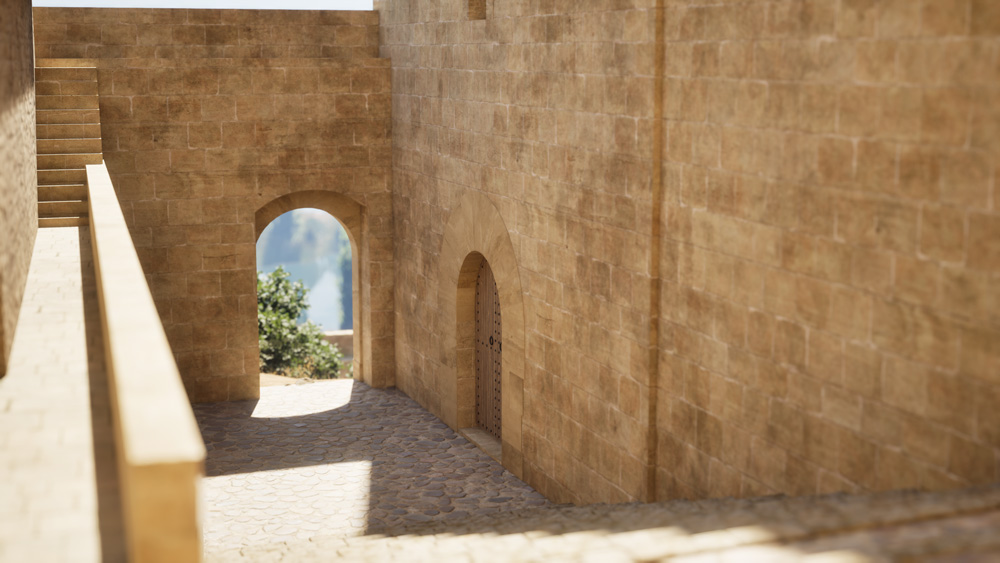
A hypothetical reconstruction of the descending staircase leading to the stables and the façade of this building between the 12th and 14th centuries.
A hypothetical reconstruction of the access to the stables (12th–14th centuries).

2a More Than Just a Templar Castle

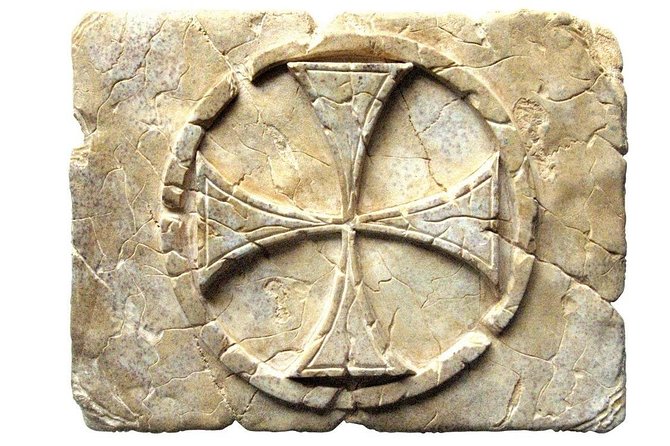
Bas-relief of a cross pattée, symbol of the Templars, inscribed within a circle and carved in stone.
Bas-relief of a cross pattée, symbol of the Templars.

Listen

2b A Symbol of New Power

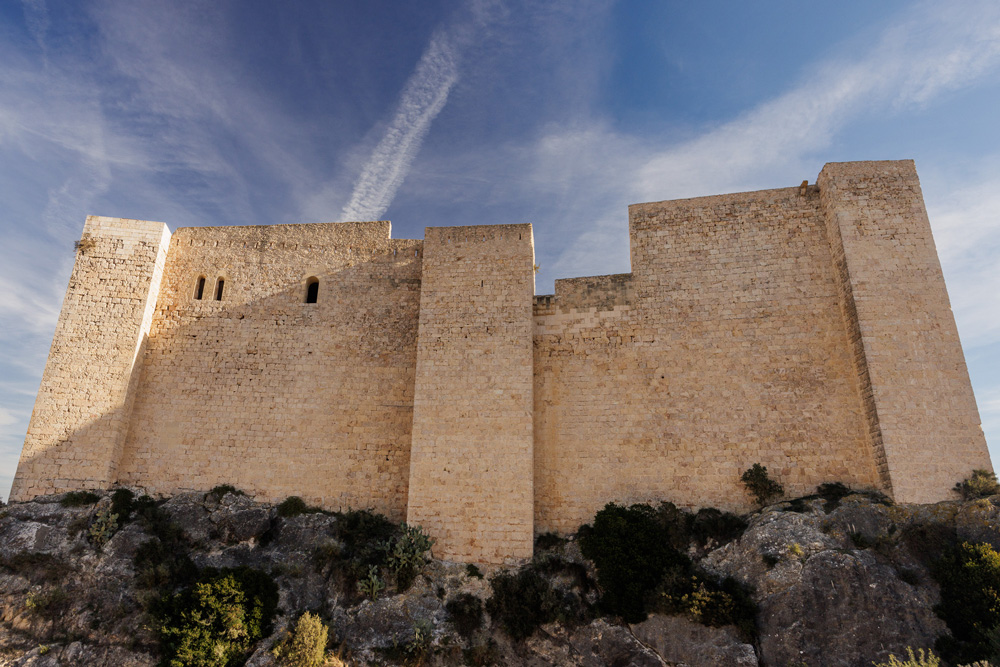
Low-angle general view of the west façade of the castle, built directly on the rock.
View of the west façade of the castle.

Listen

2c Coexistence or Living Side by Side?
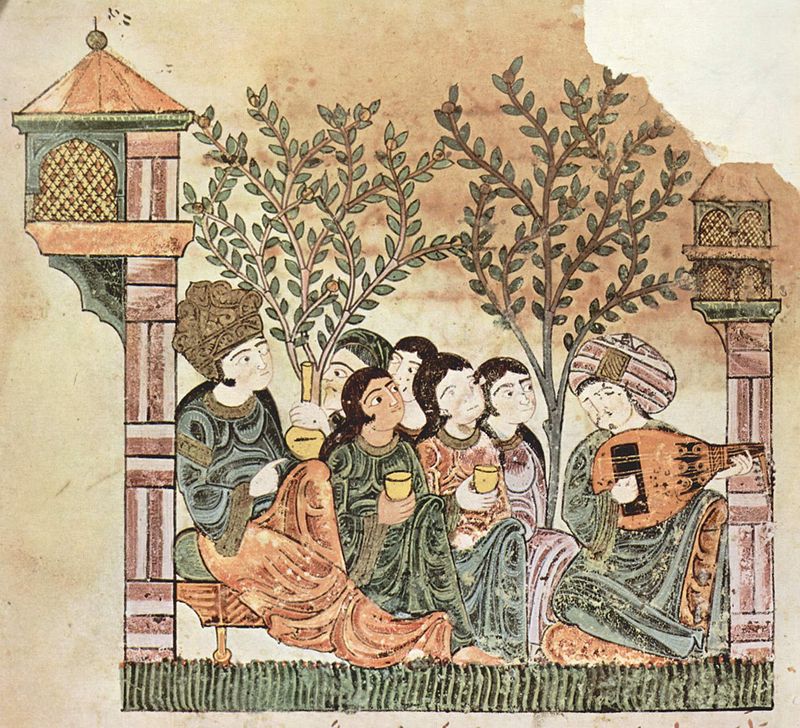
Thirteenth-century medieval drawing of a garden in al-Andalus with a small group of people seated, listening to someone playing a string instrument.
Medieval drawing of an al-Andalus garden (13th century).

Listen

3 The Stables

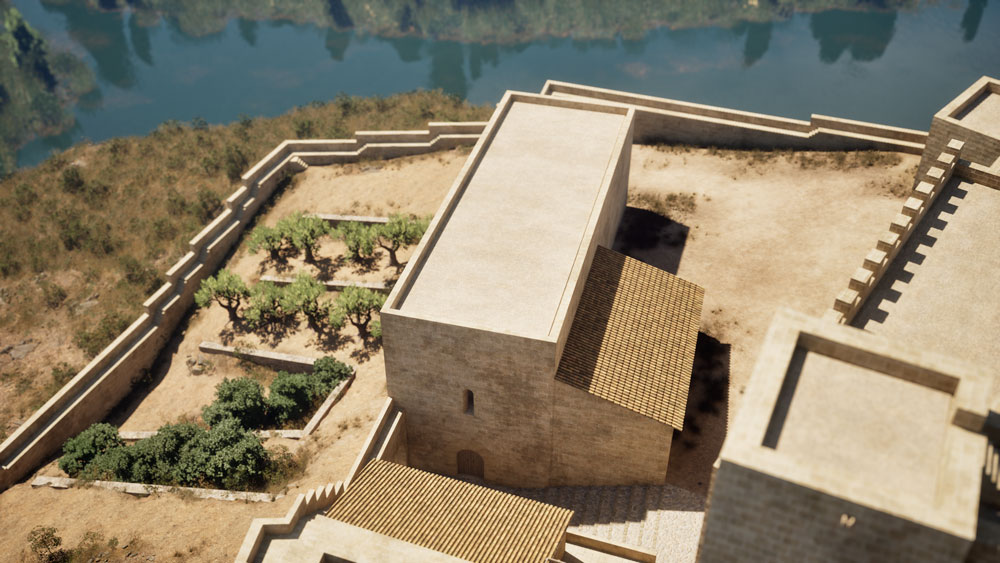
A hypothetical reconstruction of an aerial view of the lower part of the castle between the 12th and 14th centuries, with the stables building in the centre.
A hypothetical reconstruction of the stables building (12th–14th centuries).

The Stables – A Place Shaped by History and Cultural Encounters

Listen

4 Lower Outer Enclosure
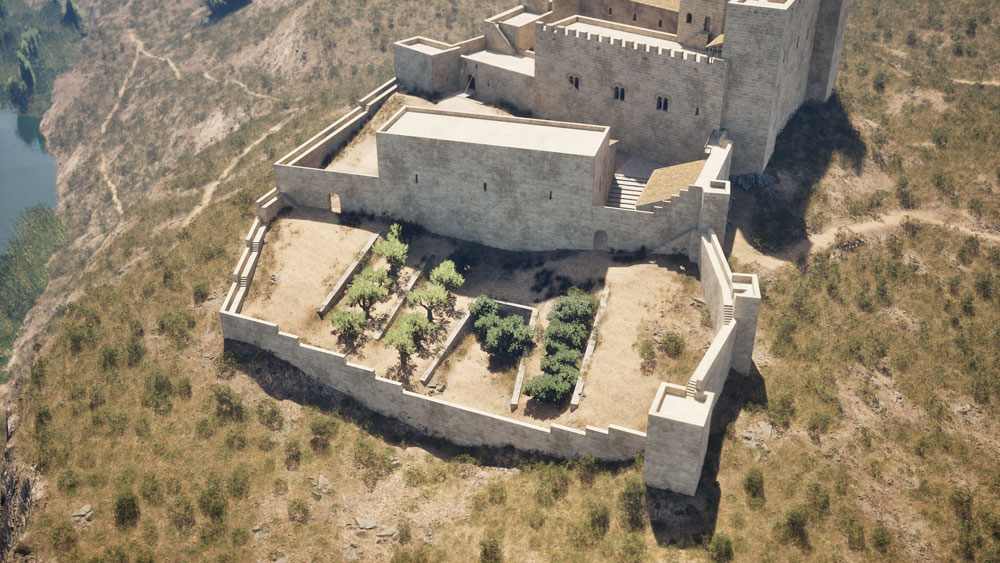
A hypothetical reconstruction of an aerial view of the lower esplanade of the castle enclosure between the 12th and 14th centuries, surrounded by walls and with the stables building.
A hypothetical reconstruction of the esplanade of the lower enclosure (12th–14th centuries).

The Lower Enclosure – A Refuge in Times of War

Listen

5 South Terrace
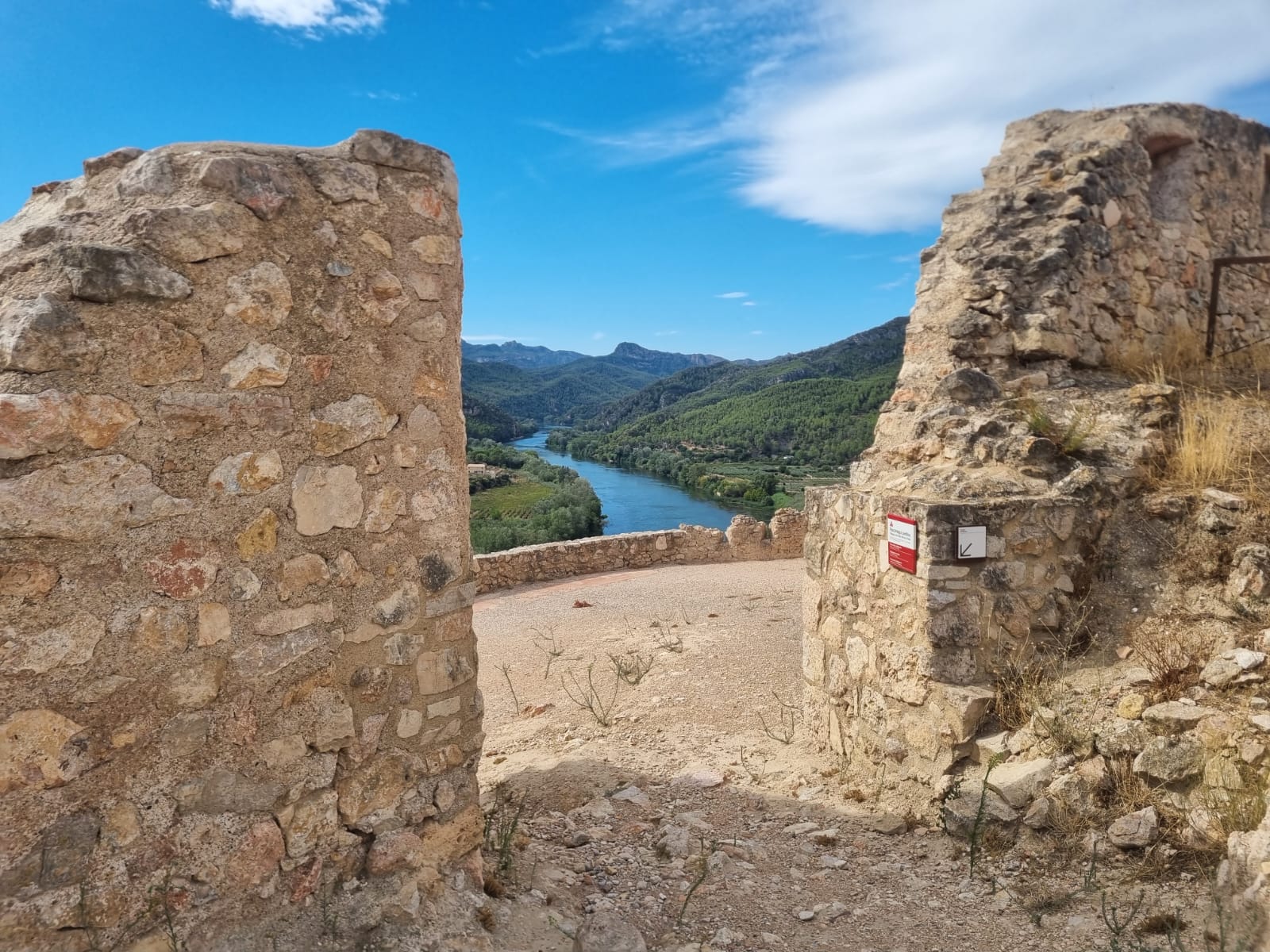
View of the castle’s south terrace through an opening in the wall. In the background, the River Ebro flows between hills covered in vegetation.
View of the castle’s south terrace.

5a The Castle’s Agricultural Landscape
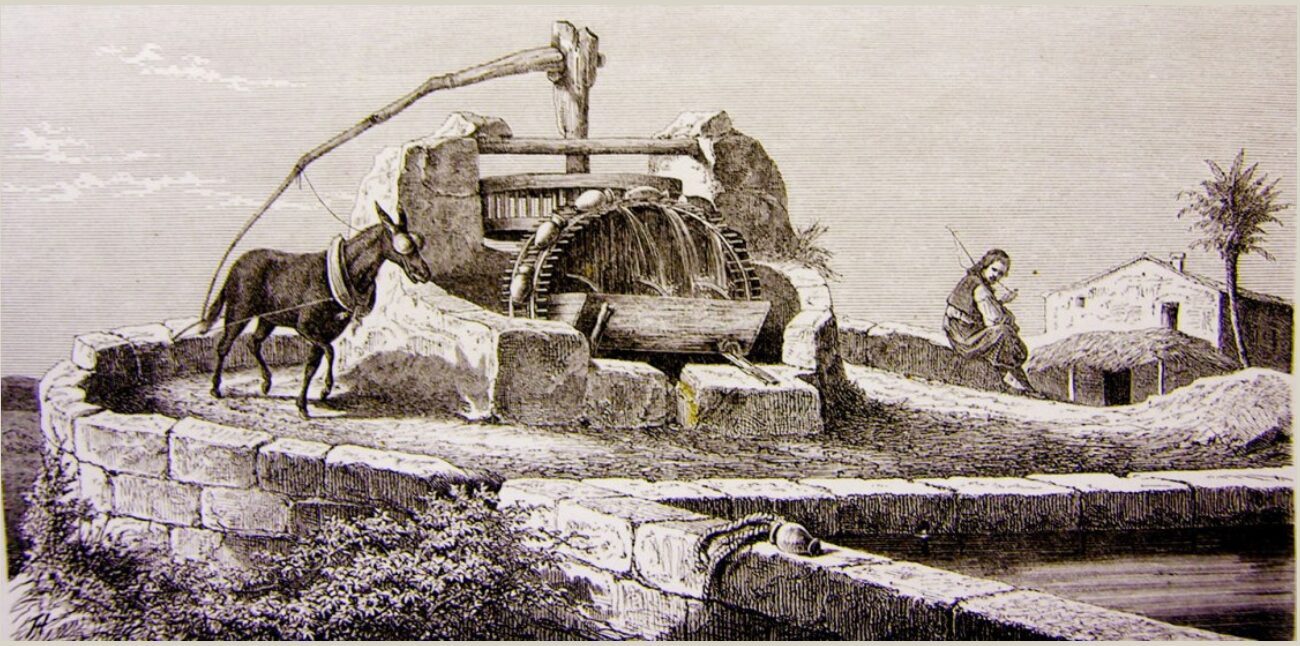
Engraving of a waterwheel.

Listen

5b A Centre of Power Over the Surrounding Lands

Engraving from between 1650 and 1655, showing the castle and the River Ebro in the foreground, and the positioning of King Philip IV of Castile’s troops during the siege of the castle at the end of the War of the Reapers.
Engraving of Miravet Castle besieged by the troops of Philip IV of Castile (1650–1655).

Listen

6 Entrance Terrace to the Upper Ward
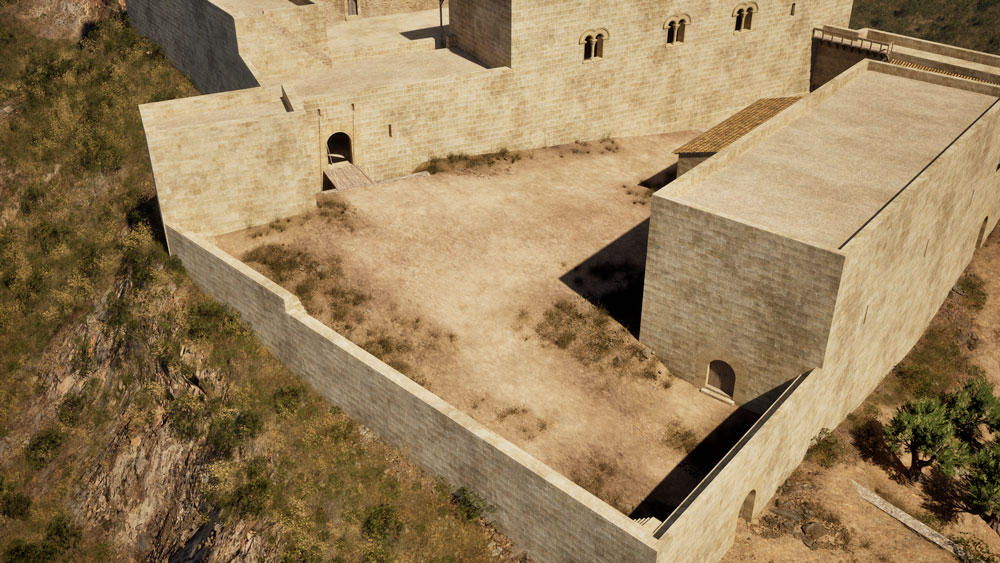
A hypothetical reconstruction of an aerial view of the access terrace to the upper enclosure, with the stables building on the right, between the 12th and 14th centuries. The access gate through the wall is small and has a wooden walkway.
A hypothetical reconstruction of the access terrace to the upper enclosure (12th–14th centuries).

6a The Christian Conquest of Miravet

Listen

6b Entering the Heart of the Castle
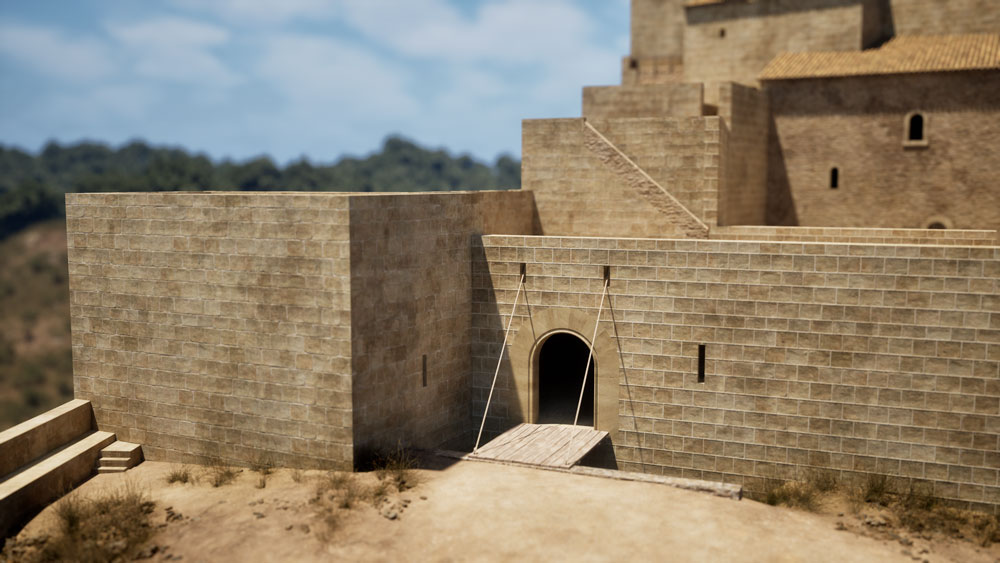
A hypothetical reconstruction of the access gate to the castle’s upper enclosure, protected by a wooden drawbridge.
A hypothetical reconstruction of the access gate to the castle’s upper enclosure (12th–14th centuries).

Listen

7 The Courtyard

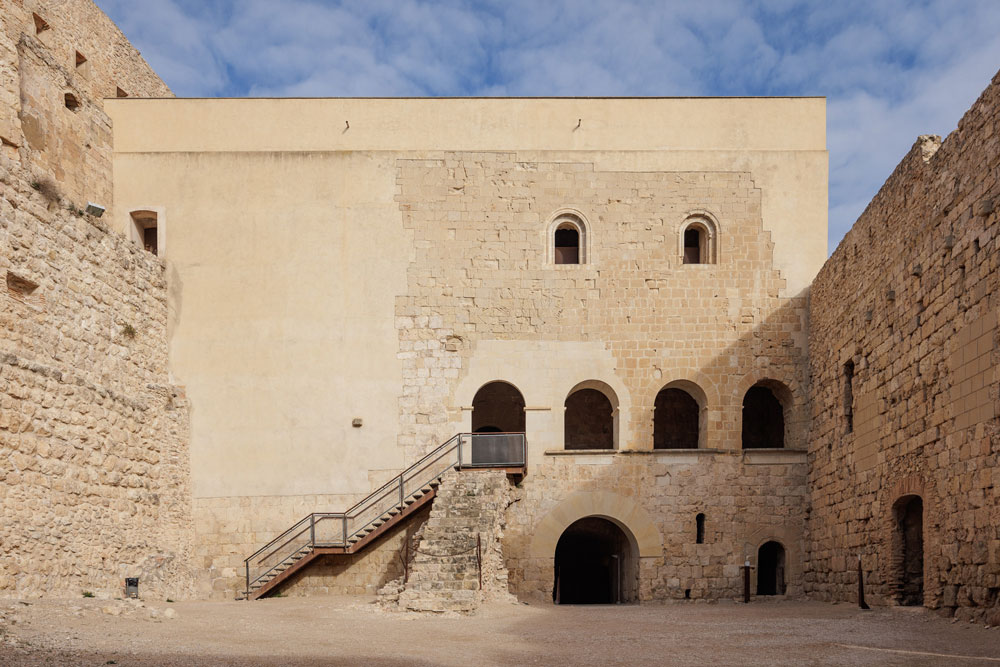
General view of the castle’s inner courtyard with the noble building façade in the background. On the ground floor are the entrances to the cellar and store; on the first floor, the four gallery windows; and on the second floor, the two windows of the commander’s chamber.
General view of the castle’s inner courtyard, with the noble building façade in the background.

7a The Courtyard as a Central Space

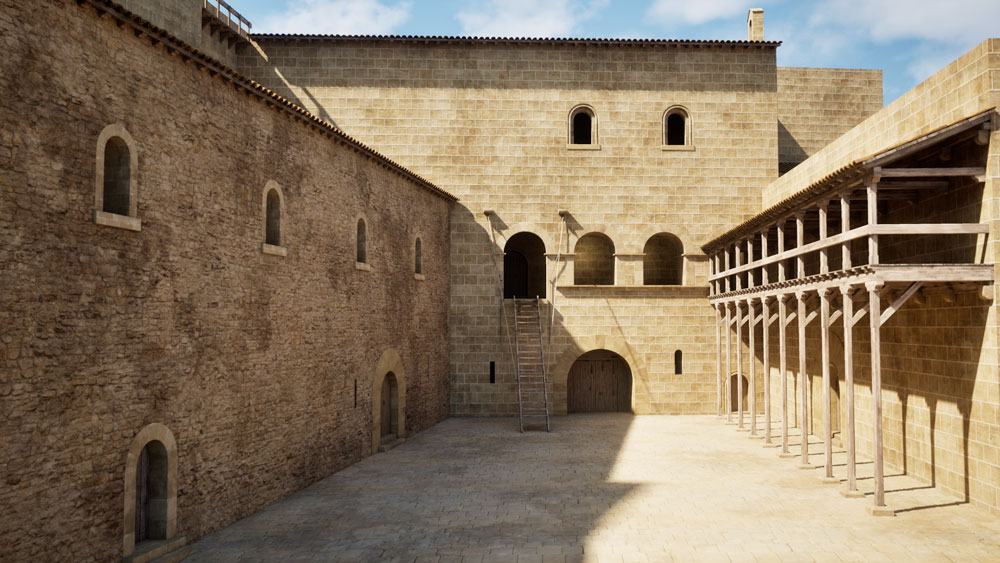
A hypothetical reconstruction of the castle’s inner courtyard between the 12th and 14th centuries. In the background, the noble building, with the cellar entrance on the ground floor, gallery windows on the first floor and two windows of the commander’s chamber on the second. On the right, the wooden scaffold attached to the refectory wall providing access to the gallery; on the left, the utility building.
A hypothetical reconstruction of the castle’s inner courtyard (12th–14th centuries).

Listen

3D recreation of the courtyard

Watch

7b The Commander’s Chamber: The Seat of Power
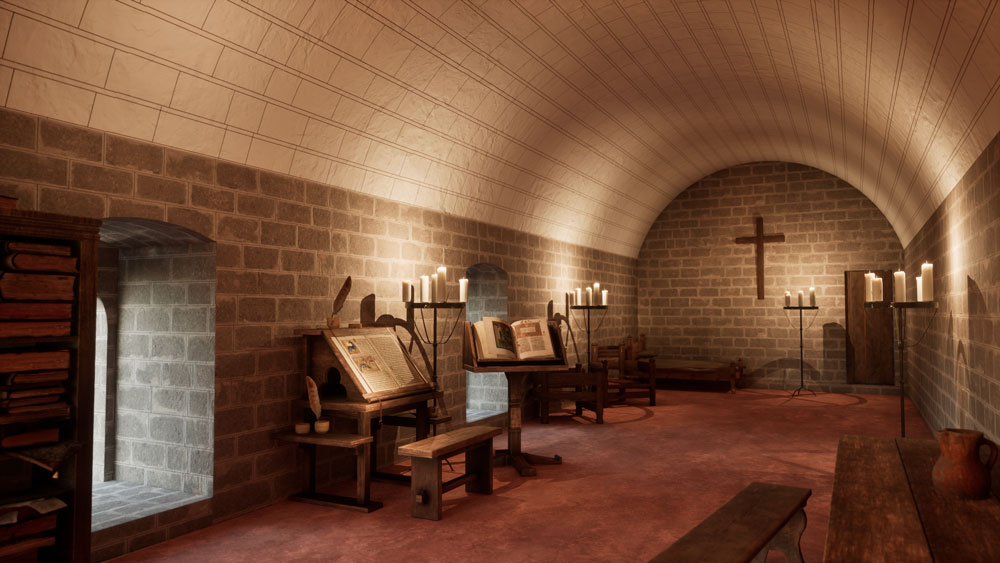
A hypothetical reconstruction of the commander’s chamber between the 12th and 14th centuries. The room is built of ashlar blocks with a vaulted ceiling. It is sparsely and simply furnished with a desk, some candlesticks, a cross on the rear wall, and little else.
A hypothetical reconstruction of the commander’s chamber of the castle (12th–14th centuries).

Listen

7c The Crusades to Jerusalem

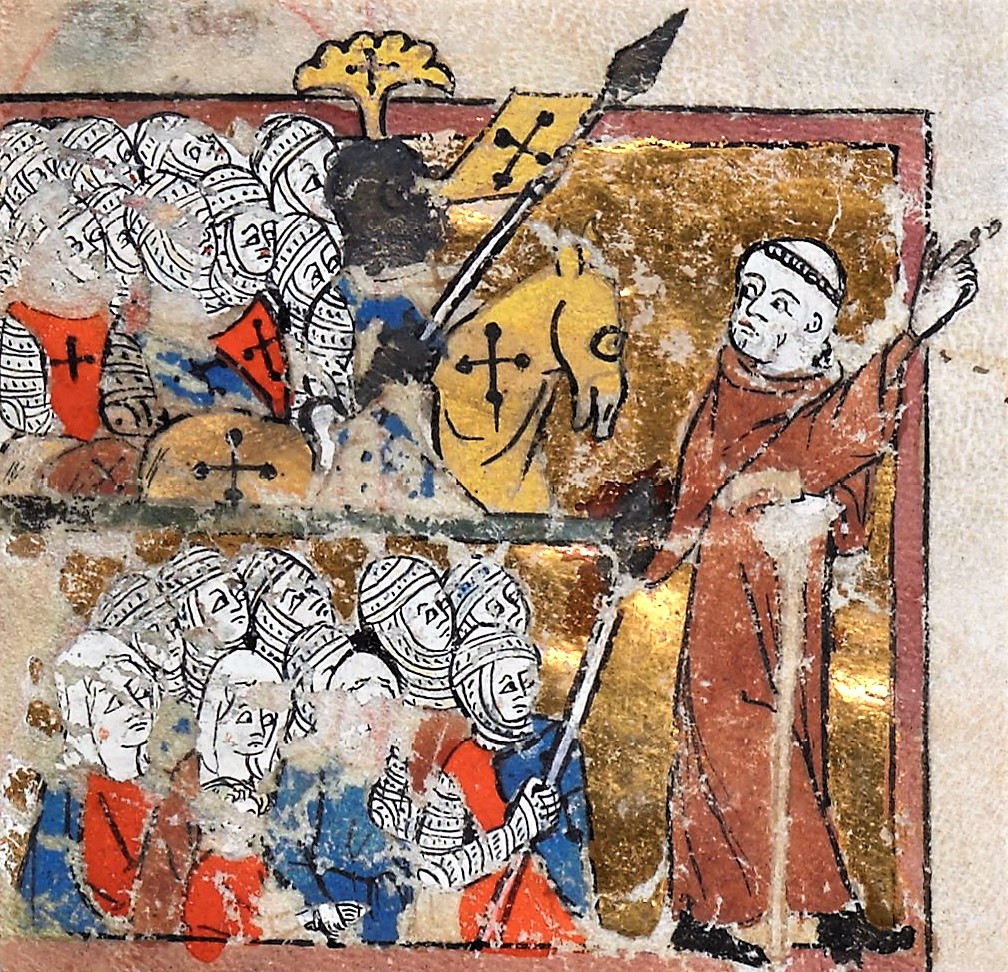
Fourteenth-century miniature showing the monk Peter the Hermit leading a large group of soldiers bound for Jerusalem.
Fourteenth-century miniature, with Peter the Hermit leading the popular crusade.

Listen

7d The Mission of the Templar Order
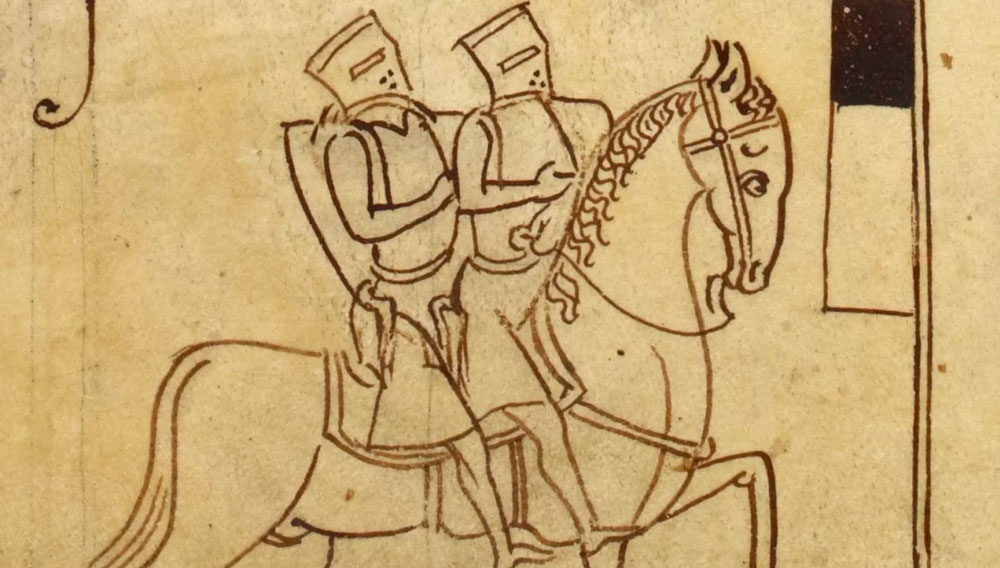
Thirteenth-century illustration of two Templar knights riding a single horse.
Illustration of two Templar knights on a horse (13th century).

Listen

7e Poor, Yet Very Rich

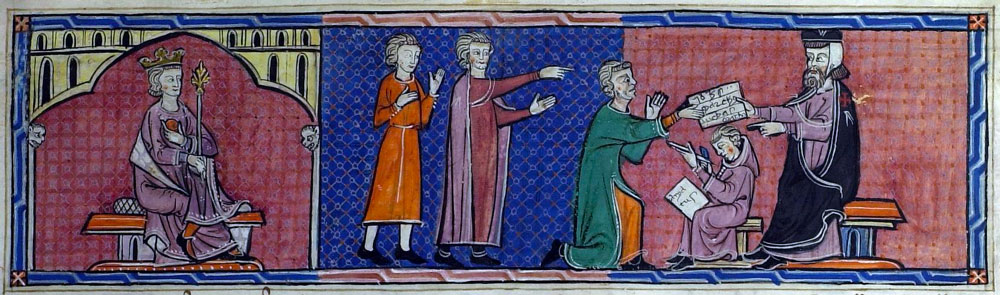
A colourful, simply drawn 1292 miniature showing King James II of Majorca and the villagers paying homage to his procurator, the Templar Jaume d’Ollers.
Miniature of King James II of Majorca and the villagers paying homage to his procurator, the Templar Jaume d’Ollers (1292).

Listen

7f Who lived in this castle?

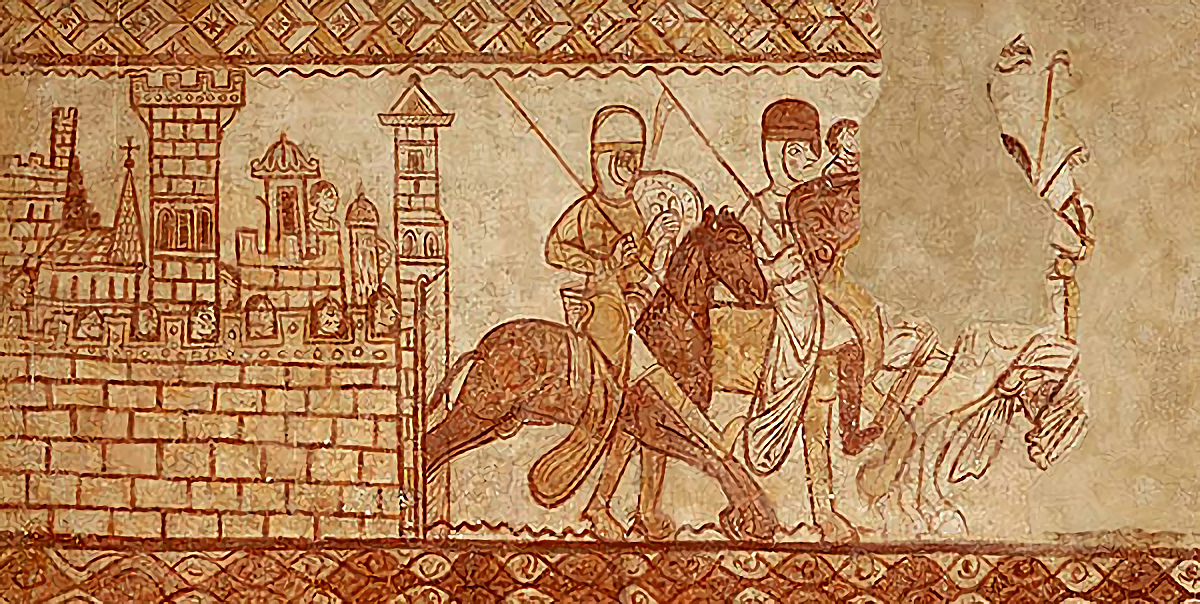
Mural painting from the church of Cressac (France). In the foreground, soldiers on horseback leaving the town on the way to war. In the background, left, figures observing through the battlements of the wall.
Mural painting from the church of Cressac (France), showing Templar knights on the way to war (12th century).

Listen

8 Refectory

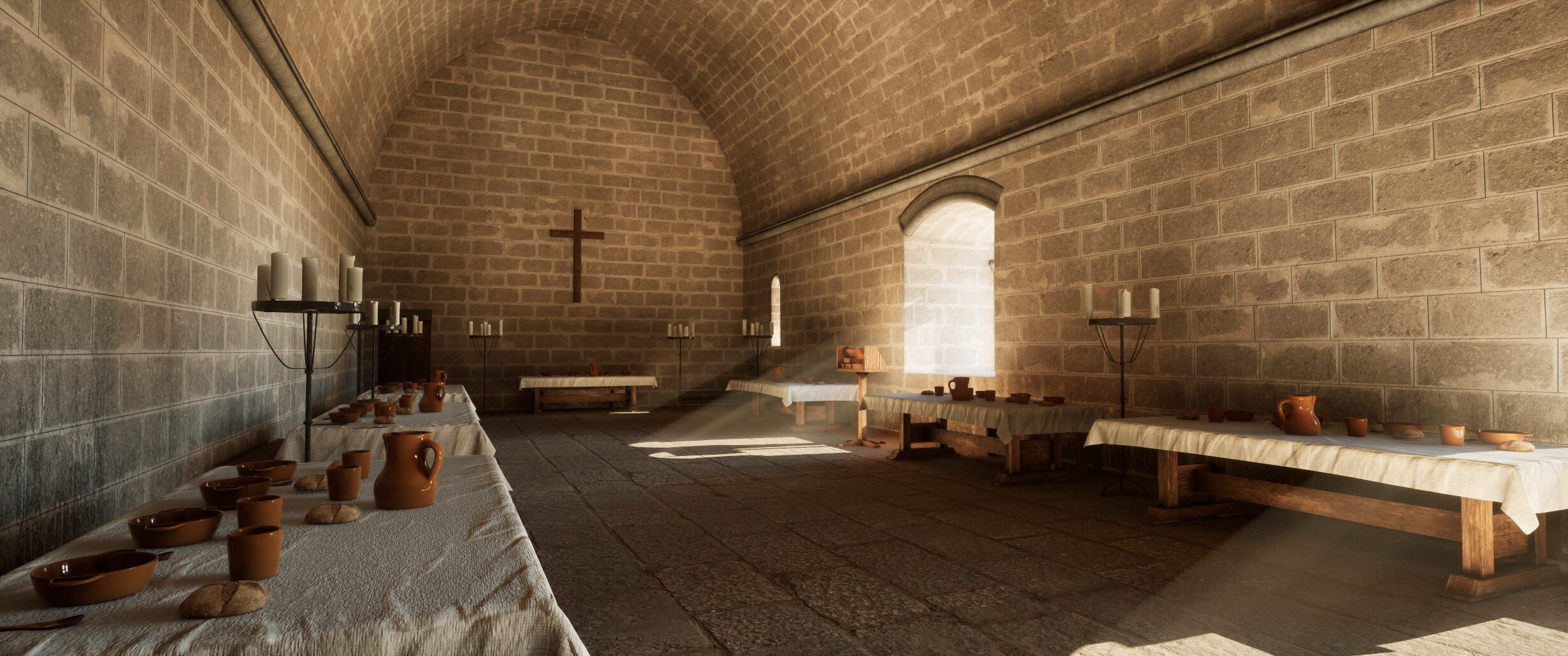
A hypothetical reconstruction of the castle’s refectory between the 12th and 14th centuries. It is an elongated hall built of ashlar blocks with a vaulted ceiling. On either side, the tables are set simply: ceramic plates, cups and jugs, wooden spoons and a few candlesticks.
A hypothetical reconstruction of the castle’s refectory (12th–14th centuries).

8a A Dining Hall with Other Uses

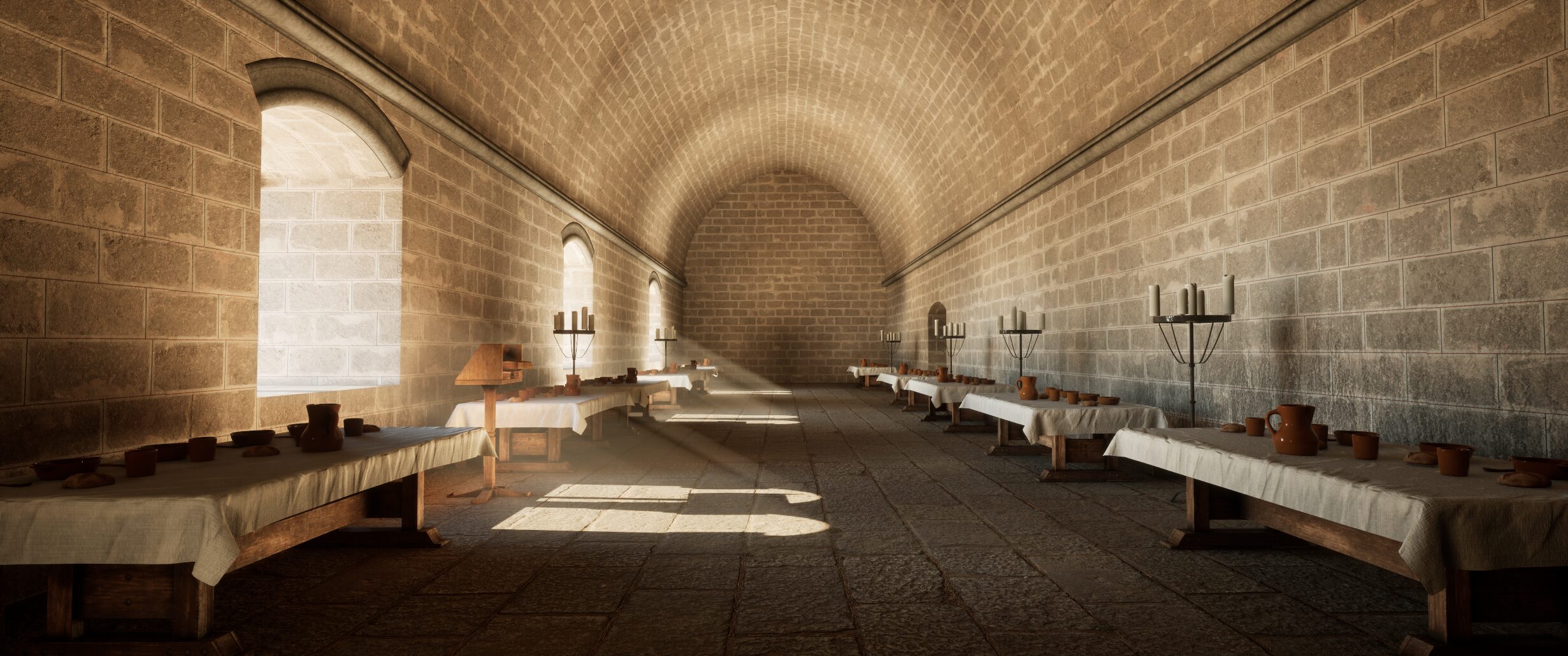
A hypothetical reconstruction of the castle’s refectory between the 12th and 14th centuries. It is an elongated hall built of ashlar blocks with a vaulted ceiling. On either side, the tables are set simply: ceramic plates, cups and jugs, wooden spoons and a few candlesticks.
A hypothetical reconstruction of the castle’s refectory (12th–14th centuries).

Listen

3D recreation of the refectory

Watch

8b The Templar Diet
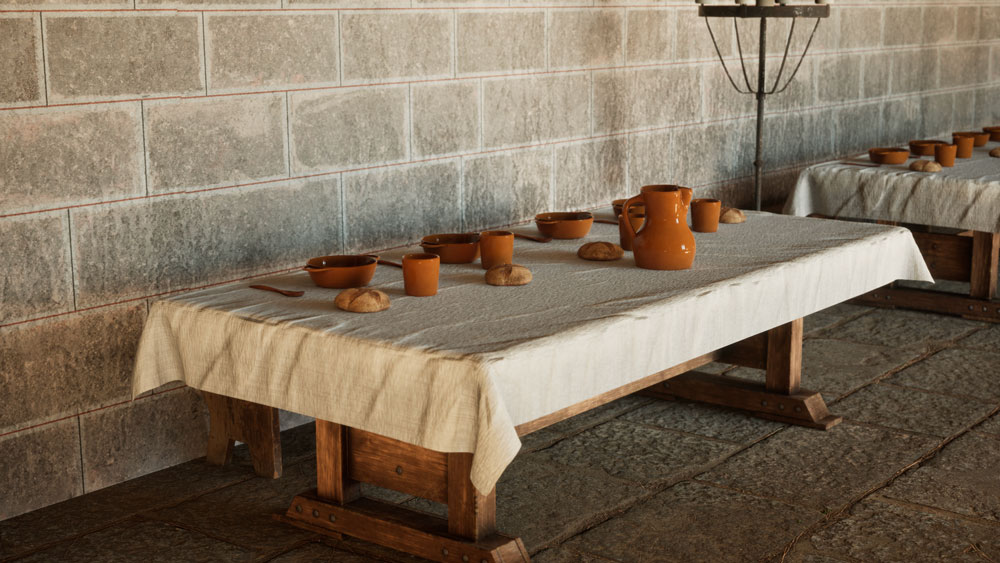
Detail of a table set for four diners in the castle’s refectory: ceramic plates, cups and a jug – all glazed brown – wooden spoons and a small bread roll per person. The tablecloths are made of natural fabric.
Detail of a table set in the castle’s refectory.

Listen

9 The Gallery

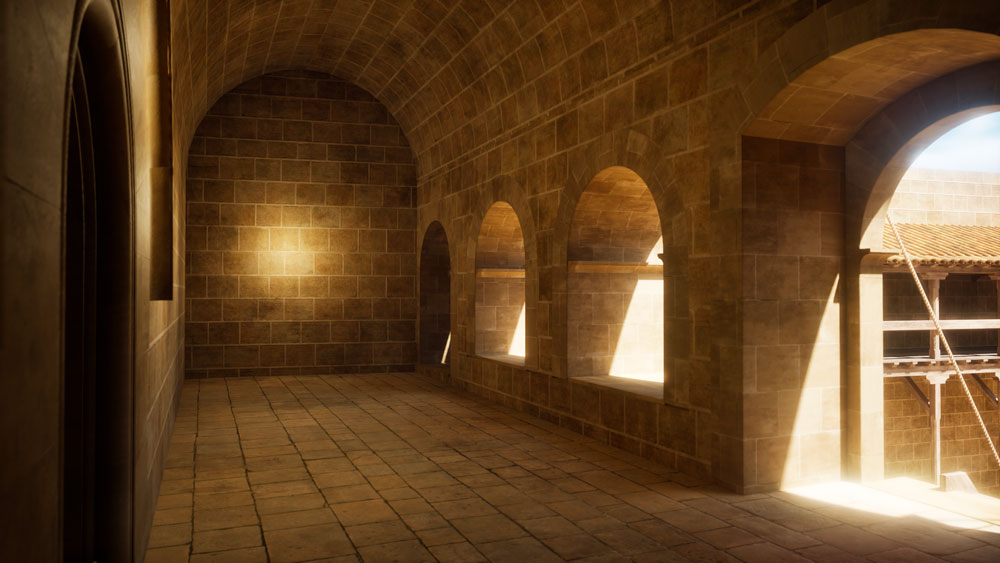
A hypothetical reconstruction of the castle’s gallery between the 12th and 14th centuries. The four arches overlooking the inner courtyard let in light. The farthest arch is the access door to the raised wooden walkway of the refectory; the two central arches are windows; and the nearest is the doorway with stairs leading down to the courtyard.
A hypothetical reconstruction of the castle’s gallery (12th–14th centuries).

9a A Space for Passing Through

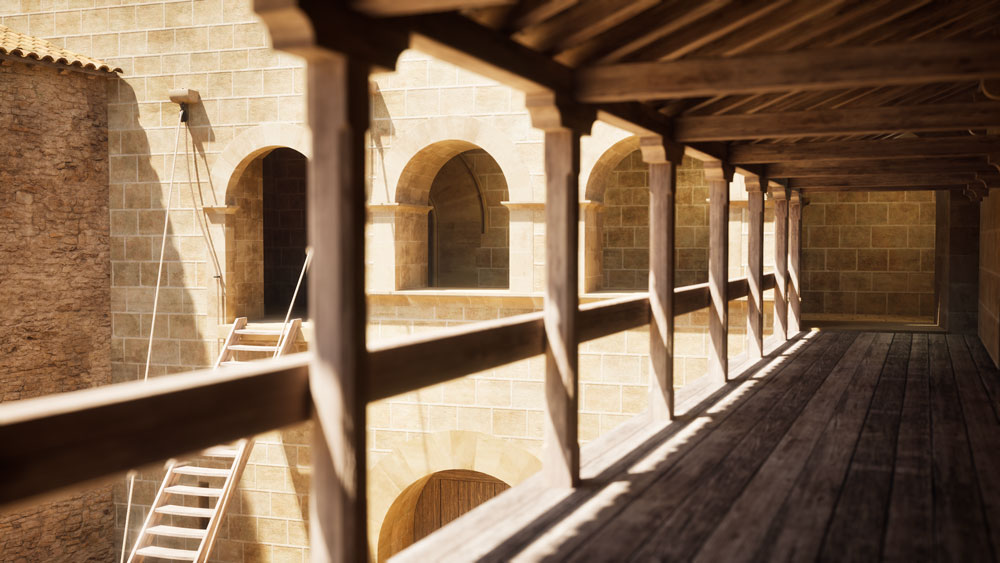
A hypothetical reconstruction between the 12th and 14th centuries of the raised wooden walkway linking the refectory to the gallery. The walkway resembles a covered wooden balcony.
A hypothetical reconstruction of the raised wooden walkway connecting the refectory to the gallery (12th–14th centuries).

Listen

9b Encintat: Decoration and Protection

Detail of the castle’s encintat [the decorative lines between the stones]. Red and black lines are painted over lime to mark the joints between the ashlar blocks of the wall.
Detail of the castle’s encintat [the decorative lines between the stones]

Listen

10 The Church

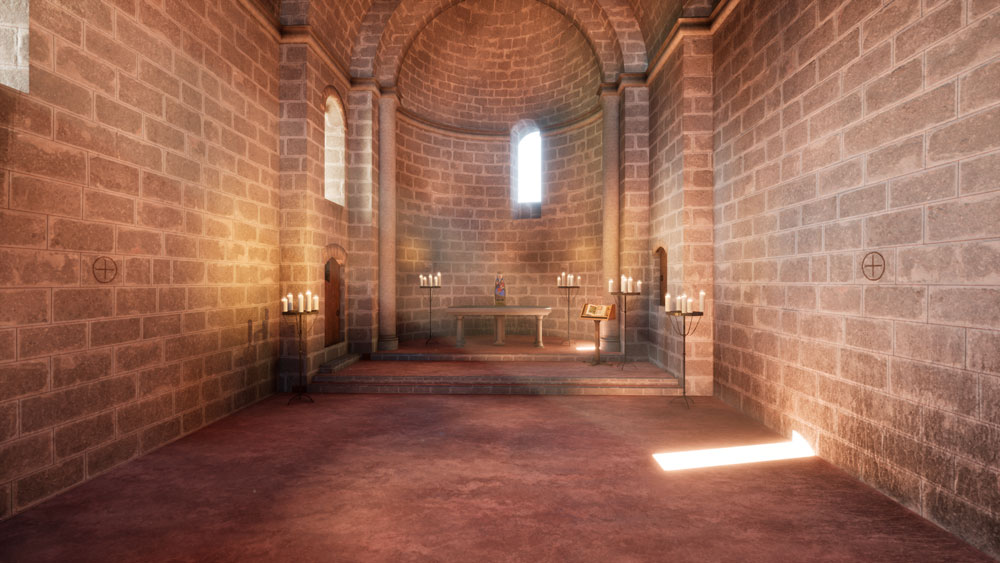
A hypothetical reconstruction of the castle church between the 12th and 14th centuries. It is a simple nave built of exposed ashlar blocks without decorative elements. At the back of the apse is a window, set slightly off-centre to the right.
A hypothetical reconstruction of the castle church (12th–14th centuries).

10a A Sacred Space Full of Meaning

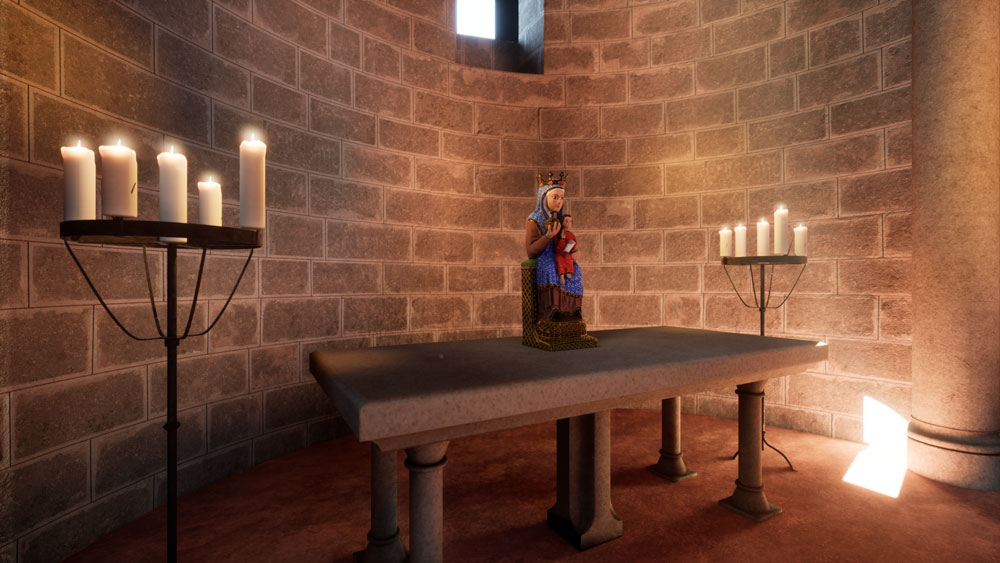
A hypothetical reconstruction of the altar in the castle church between the 12th and 14th centuries. On the six-legged altar stands the image of the Virgin. Behind it is a tabernacle and a cross. Flanking the ensemble are a pair of candlesticks.
A hypothetical reconstruction of the altar in the castle church (12th–14th centuries).

Listen

10b An Austere and Dimly Lit Church

A hypothetical reconstruction of the castle church between the 12th and 14th centuries. It is a simple nave built of exposed ashlar blocks without decorative elements. At the back of the apse is a window, set slightly off-centre to the right.
Hypothetical reconstruction of the west end of the castle church, featuring the rose window (12th–14th centuries)

Listen

10c Consecration Crosses – Marks of the Sacred
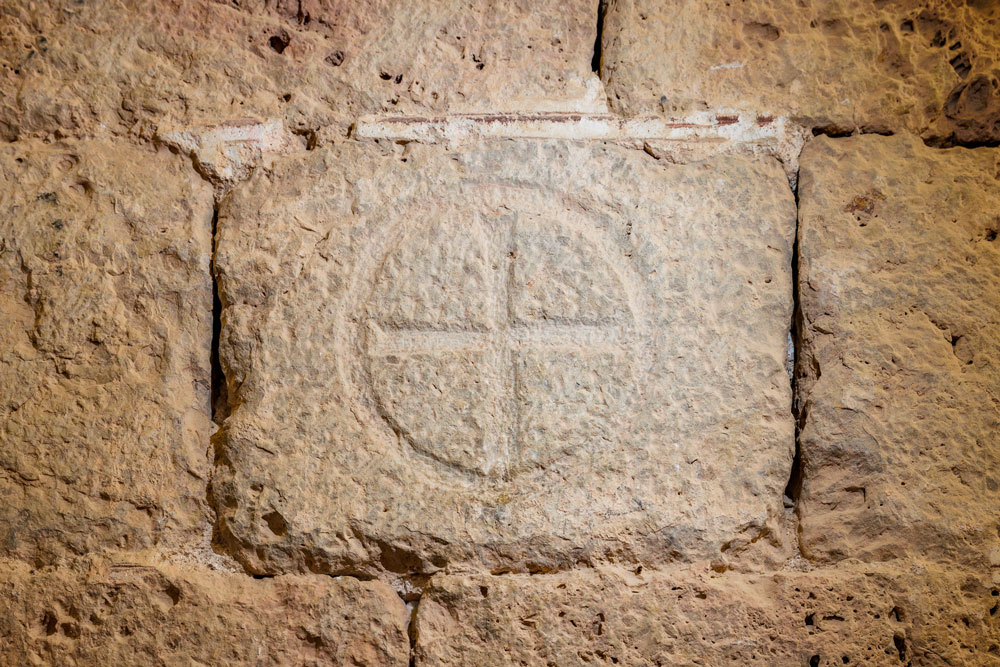
Detail of a consecration cross carved into the stone of the castle church wall, inscribed within a carved circle.
Detail of a consecration cross in the castle church.

Listen

3D recreation of the church hall

Watch

10d Joining the Order – Discipline, Punishments and “Much Suffering and Toil”
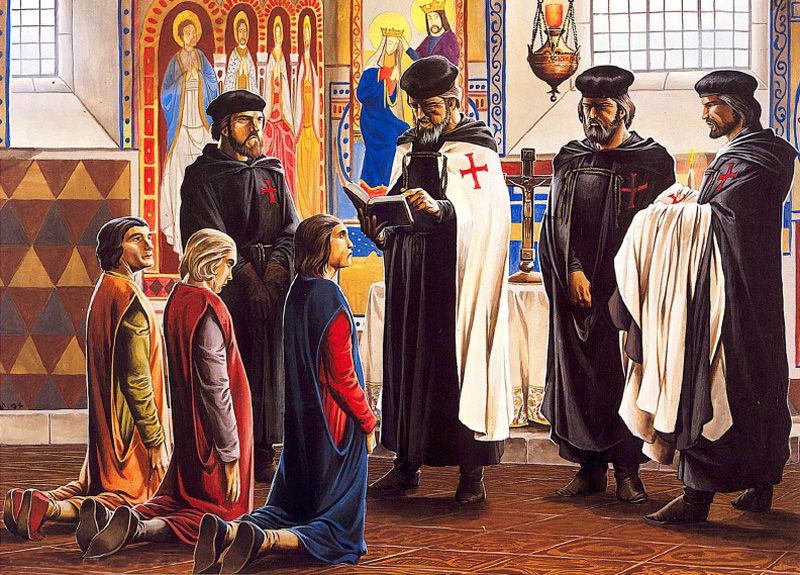
Modern painting depicting the initiation ceremony into the Order of the Temple. Three kneeling novices listen to the officiating Templar reading the Templar rule, while three other Templars witness the scene.
Initiation ceremony into the Order of the Temple.

Listen

10e Access to the Treasury Tower
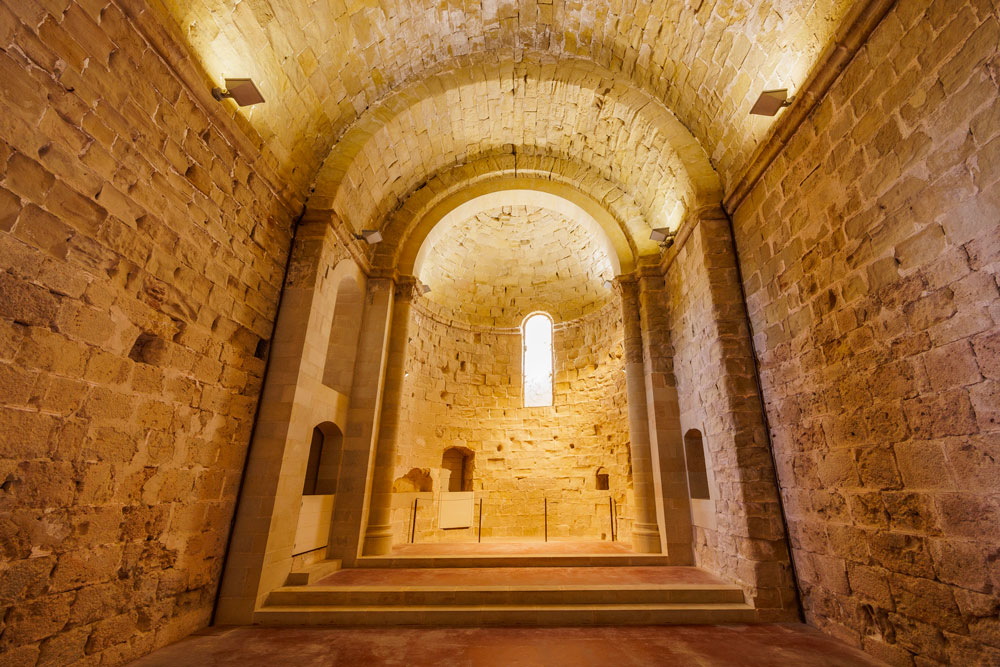
View of the church altar with access to the treasury tower on the left. The altar is reached via steps. The apse wall has a tall, narrow window that lets in the morning light.
View of the church’s apse.

Listen

Closure

Listen

Els Ulls de la Història: An Immersive Look at Heritage” is an initiative run by the Agència Catalana del Patrimoni Cultural. It’s a project that brings together diverse voices and perspectives on our past because we all play a part in shaping history.

We value your feedback: Please take a moment to answer these questions

* indicates a required field.